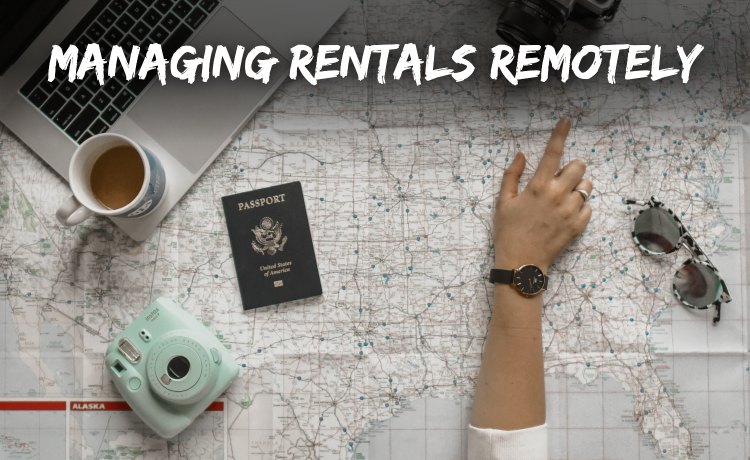
It’s something people always ask me when I tell them I travel a lot while earning rental income: “Wait… but how do you manage that from a distance?” It seemed like the perfect moment to dive a little deeper into the subject and share my experiences after years of managing rental properties remotely.
(Editorial note: this blog was originally published on RemoteOndernemen.nl. I’ve since updated and adapted the article to better reflect my situation and the way I actually combine running my business, managing my rental properties, and travelling. The core information remains the same.)
Why I Wanted a Remote Passive Income
 Ever since I was a child, I knew I wanted to see more of the world. The stories of explorers who sailed to unknown places fascinated me. The idea that there were so many places beyond my safe and familiar surroundings that I had never seen sparked my curiosity.
But like many people, I ended up following the “normal” path: finishing school, going to university, and eventually starting my first job. During those first years, there was plenty of excitement. I completed a fantastic traineeship, invested in my personal development, started my own business, and thoroughly enjoyed my life in Rotterdam.
After a few years, however, something started to feel off. I had grown tired of the Dutch weather. I felt that work had taken over too much of my life and that there wasn’t enough time left for the things that really mattered. The balance simply wasn’t right. I felt very strongly: This is not how I want to grow old.
I wanted more time to enjoy life, to see more of the world, to experience less stress, and to spend less time dealing with bad weather. So I came up with a plan to achieve financial freedom. The question I wanted to answer was simple: How can I travel the world without being dependent on income from a job?
The goal was never to stop working altogether. I genuinely enjoy working. What I wanted was the freedom to work only when I felt like it, without worrying about whether I could afford the lifestyle that came with traveling. A completely passive income seemed like the perfect way to create that freedom.
My Life Today
It’s now been twelve years since that plan first appeared on paper. It started as a few rough sketches on a blank sheet of paper. Later, those sketches turned into an Excel spreadsheet filled with numbers, calculations, and detailed plans. In the end, it took eight years to turn that plan into reality.
Looking back, I’m still amazed by how quickly I managed to completely change my life. It shows what’s possible when you’re truly committed to a goal. I’ve been running my business remotely, which has given me the flexibility to travel.
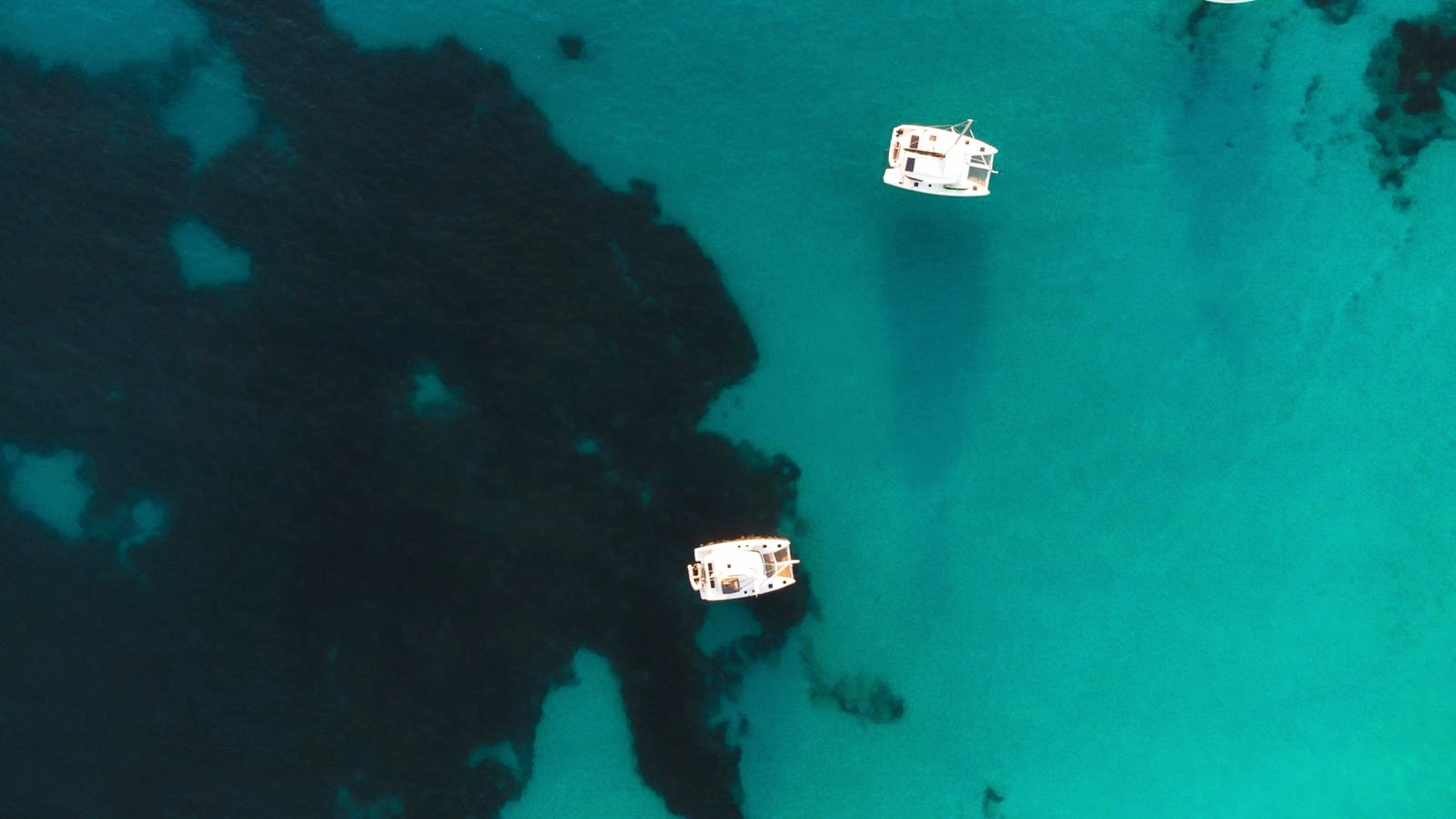
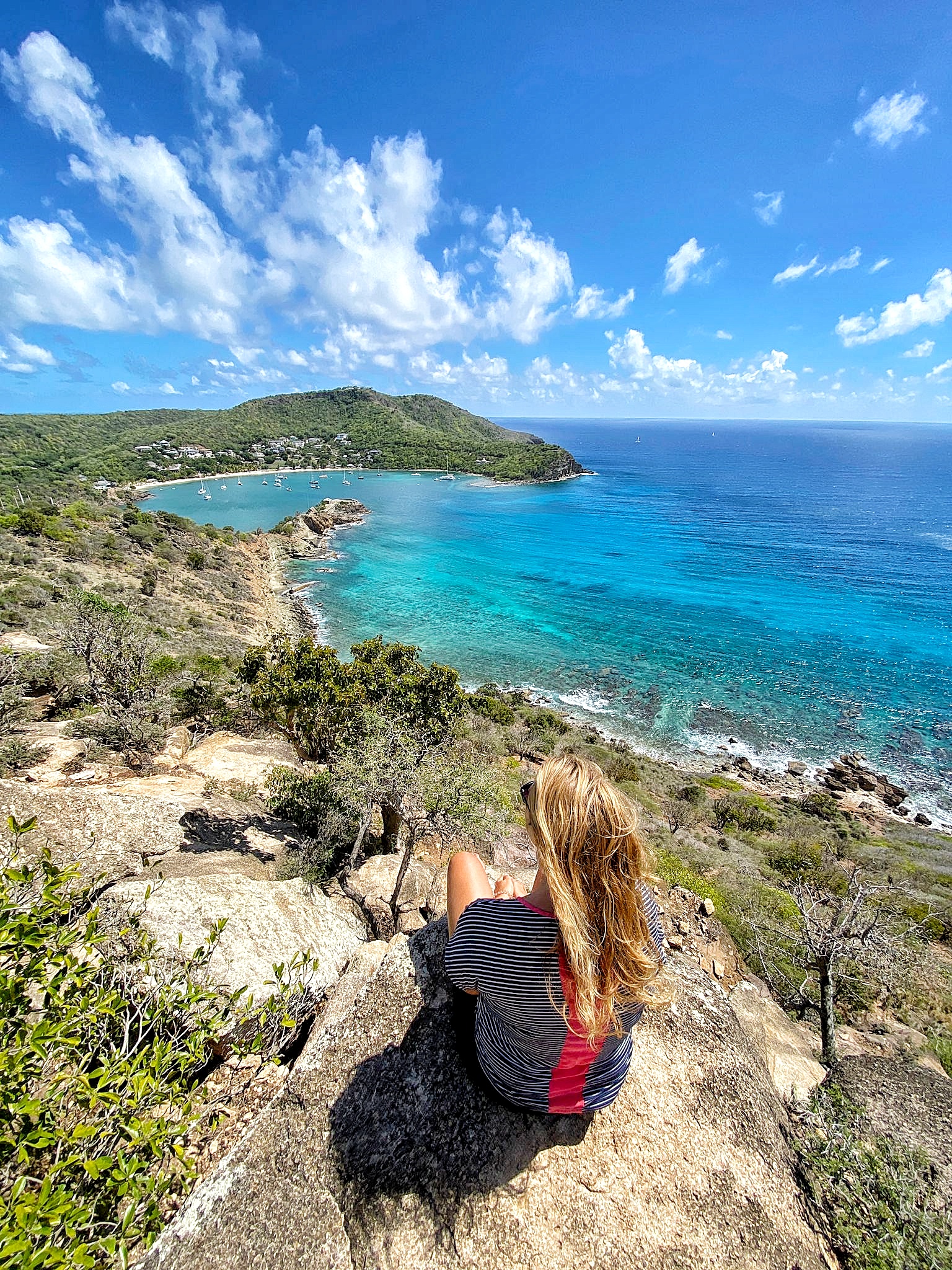
Over the past four years, I’ve had the opportunity to visit some incredible places. I’ve anchored a boat in the crystal-clear waters of Ibiza, driven my campervan to the northernmost point of mainland Europe, wild camped across Scotland, spent weeks hiking through the Dolomites, and even crossed the Atlantic Ocean to the Caribbean.
These are experiences and memories that no one can ever take away from me, and I wouldn’t have wanted to miss them for anything. Traveling has also brought me closer to myself. Not only because I completely changed my life and had to reinvent myself, but also because I gradually stopped defining my identity through my work.
I learned to live more slowly. To enjoy being present in the moment. To create more space in my mind. To meet incredible new friends from all over the world. And I began to understand that life has so much more to offer than just having a job.
Is Real Estate the Ideal Remote Source of Income?
Going back to the plan I made about twelve years ago, I accidentally discovered how relaxing it is to generate passive income through owning real estate when I decided to rent out my apartment in Rotterdam instead of selling it.
The calculation was straightforward. Based on my expected travel expenses, I realized that the rental income from two properties could cover a significant part of the costs of the lifestyle I wanted to create. With the goal of achieving financial freedom and being able to travel, investing in real estate seemed like the perfect solution.
The big question, however, was obvious: How was I going to manage everything while I am not always in the Netherlands?
How do you solve problems with tenants when you’re abroad? How do you find reliable people for maintenance and repairs? And how do you arrange a new tenant when someone moves out? With the mindset of “It must be possible – I just don’t know exactly how yet,” I started experimenting…
Outsource It or Manage It Yourself?
The first decision you have to make is whether you want to manage your rental property yourself or hire a property manager.
At first glance, it may seem as though you need to be physically present in order to rent out a property. After all, there are quite a few tasks involved in managing rental real estate:
- Collecting the rent
- Communicating with tenants (directly or through a platform such as Airbnb)
- Paying bills (taxes, electricity, water, internet, etc.)
- Welcoming guests, handing over keys, and arranging cleaning (for holiday rentals)
- Organizing maintenance and repairs (including homeowners’ association responsibilities)
- Submitting utility meter readings
- Inspecting the property after a tenant moves out
- Finding a new tenant

Considering a property management company is therefore a logical option, and there are plenty of agencies eager to take over these responsibilities.
However, keep in mind that by doing so, you will lose a large part—if not all—of the passive income you’re hoping to generate. Not only because a property manager charges for their services, but also because they often handle things less cost-effectively than you would yourself. Quite simply, they aren’t spending their own money.
For example, I temporarily hired a property management company to manage my rental property in the Netherlands. I was still living there at the time and wanted to find out whether it would be a good solution once I started traveling. I accepted that my rental income would be lower during that period.
What I discovered was that the property manager wasn’t nearly as efficient as I had hoped. Whenever a tenant reported a problem, they immediately sent a contractor. That meant I was charged call-out fees every single time, regardless of how small the issue was. On one occasion, the tenant reported that there was no hot water. It turned out the central heating boiler simply needed to be reset. That is exactly the kind of problem I’d much rather solve myself. It saves a considerable amount of money.
By managing the properties myself, I can keep costs under control and retain more of the rental income to support the flexible lifestyle I had created. My experience over the past four years has shown that managing rental properties yourself can be perfectly combined with a life of travel, without requiring an enormous amount of time.
It does, however, require some careful planning and smart systems.
Lessons I’ve Learned from Managing Rental Properties Remotely
At the moment, I own two rental properties: a house in the Netherlands that I rent out on a long-term basis and an apartment in Spain that I use as a holiday rental. Over the years, I’ve experimented with many different approaches to create a setup that works well.
Below, I’d like to share some of the lessons I’ve learned. These are, of course, my personal choices. If you’re considering investing in real estate and managing it remotely yourself, I hope they inspire you to find the approach that best suits your own lifestyle.
 Lesson 1: Much More Can Be Done Remotely Than You Think
Managing as much as possible yourself is, in my opinion, the best way to maintain a healthy rental income.
My starting point is simple: If I can do it myself, I do it. If I can’t, I ask someone else to help.
I monitor rent payments, communicate with tenants, pay the bills, and arrange contractors whenever maintenance or repairs are needed. All of these tasks can easily be organized remotely.
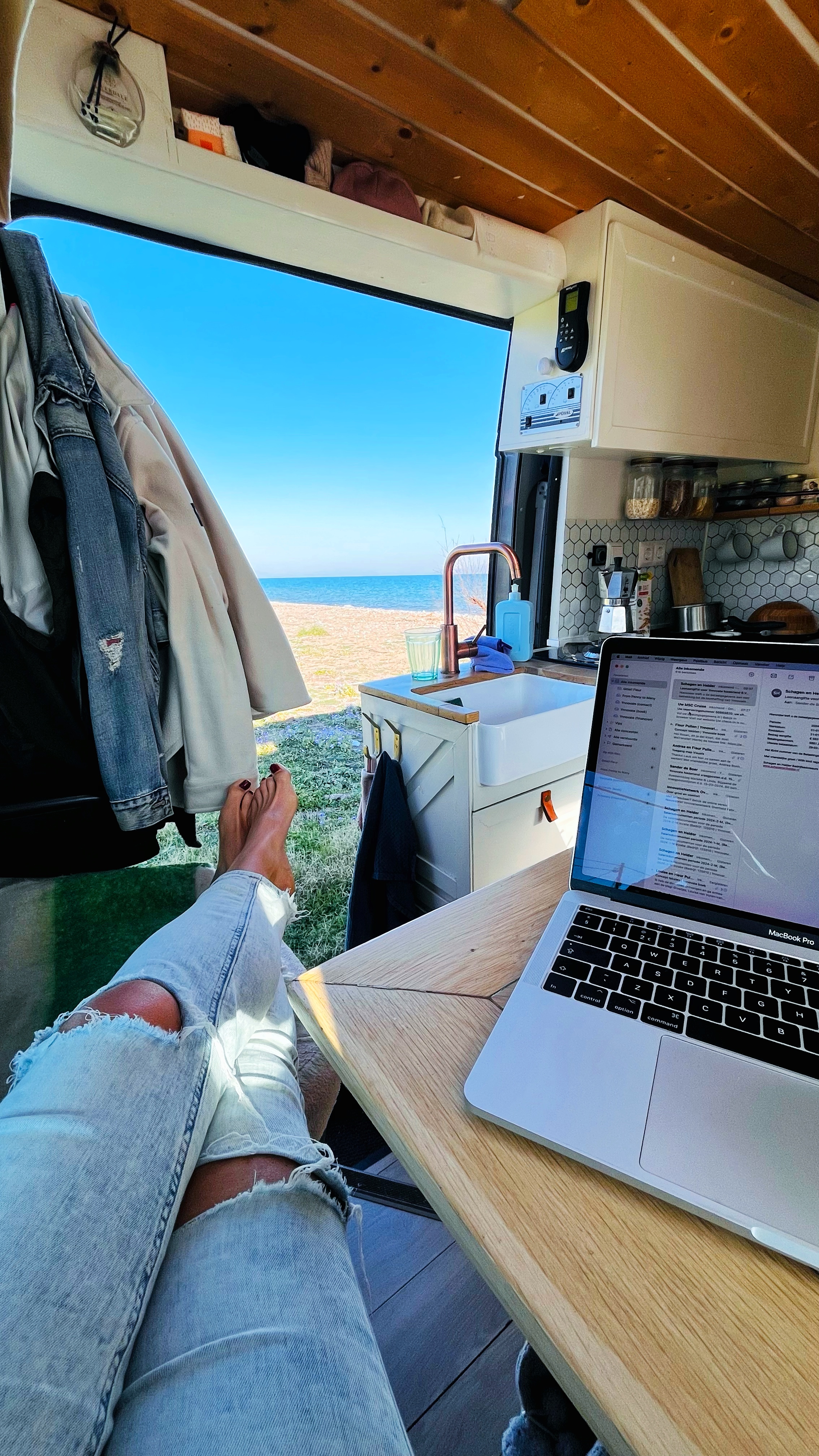
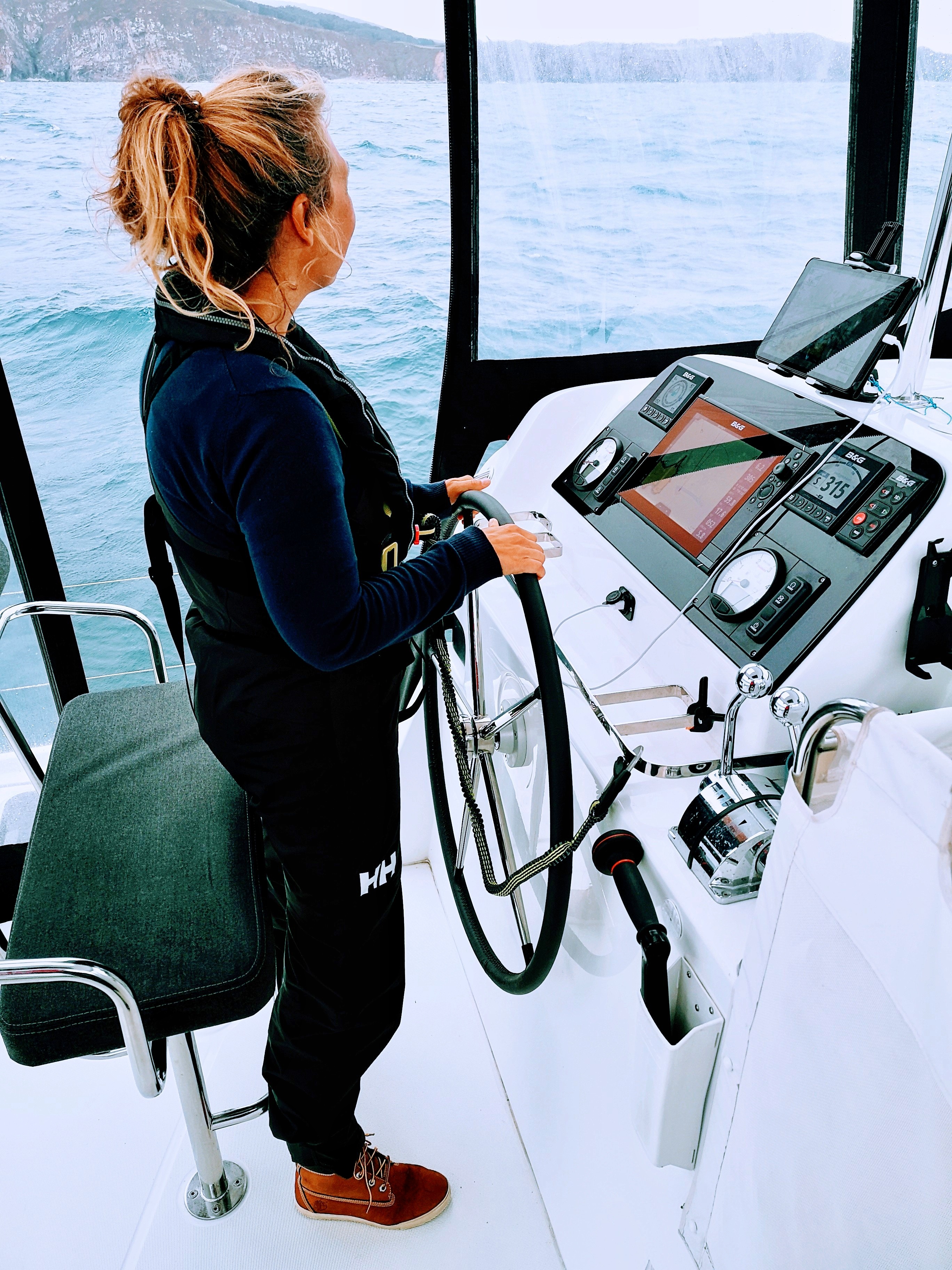
In fact, even if I happened to be close to the property, I would probably arrange most of these things by phone or online anyway. Whether I’m traveling through Greece with my campervan or spending time sailing near Madeira, the practicalities of managing my properties remotely remain much the same.
Lesson 2: Renting Out Property Does Not Create 100% Passive Income
Renting out real estate requires attention, time, and energy. No matter how efficiently you organize it, it will never become completely passive. Be realistic: you’ll always spend some time on it. On average, I spend between one and two hours per week managing my two rental properties.
Considering that they generate enough passive income every month to cover my basic expenses, I think that’s a very reasonable trade-off.
Of course, that also reflects the fact that I’ve gradually built a system that works well. Holiday rentals require considerably more time than long-term rentals. Because guests stay for shorter periods, there’s much more communication involved. There are booking requests, questions about the local area, messages about delayed arrivals, and occasionally forgotten belongings that need to be returned after guests have gone home.
For example, one guest in Spain realized after returning home that she had left her e-reader behind. By that time, new guests had already checked into the apartment. That meant coordinating with both the previous and the current guests, while also finding a practical way to return the device. Fortunately, one of my neighbours kindly offered to take the e-reader to the post office and send it back. Experiences like these remind me that rental income isn’t completely passive.
Unexpected situations will always arise. The difference is that they’re usually manageable—and certainly not a reason to give up the freedom that real estate investing has given me.
 Lesson 3: You Can’t Do Everything Yourself from a Distance
As the previous example already showed, there are, of course, limits to what you can do yourself. Sometimes you simply need other people. In my experience, these are the tasks for which you’ll genuinely need help when managing rental properties remotely.
Maintenance and Repairs
If you’re handy, you can schedule a period each year to carry out maintenance yourself. But if you’re anything like me and DIY isn’t your strong suit, outsourcing is the best option. Emergency repairs, in particular, will always have to be handled by someone else when you’re managing your properties remotely.
My first piece of advice is simple: Buy a low-maintenance property.
Secondly, build a reliable team of tradespeople around your property whom you can trust. Good contractors aren’t easy to find. By investing time in building a strong network, you can be confident that you’ll receive quality help whenever you need it. At the very least, I recommend having a reliable plumber, a central heating engineer, and an all-round handyman or carpenter.
Thirdly, make sure people can access the property when necessary. You can arrange this through your tenants, but in my experience that requires a lot of coordination. It’s much easier to organise another solution. For my apartment in Spain, for example, I installed a digital key safe that allows me to generate temporary access codes through an app. I also make sure someone nearby always has a spare key.
Pro tip: If possible, live in the property yourself for a while before renting it out. You’ll be surprised how many small issues and “teething problems” you’ll discover yourself before paying tenants ever encounter them. After that, ask a friend to test the property. I did exactly that with my apartment in Spain, and it was incredibly valuable to see what they noticed. Things like too few towels, unclear instructions about where to dispose of rubbish, or confusion about how the washing machine worked. As the owner, those things seem obvious because you already know how everything works. Your guests don’t.
Welcoming Guests and Cleaning (Holiday Rentals)
For my apartment in Spain, I have someone who welcomes guests and takes care of the cleaning after each stay. That’s simply unavoidable. One thing I do recommend is having a solid backup plan. I initially worked with a Dutch couple who managed everything for me, but one day they unexpectedly had to stop because of personal circumstances. At that moment, I was incredibly grateful that I already knew a second cleaner who was able to step in at very short notice.
Finding a New Tenant (Long-Term Rental)
With holiday rentals, guest turnover is largely taken care of once you’ve arranged cleaning and check-ins. Long-term rentals are a little different, because finding a new tenant remotely requires more organisation. Over the years, I’ve developed a system that allows me to do this without being physically present. I rent out a property with three bedrooms and shared kitchen and bathroom facilities. That means that when one tenant moves out, the other two remain in the house, making it much easier to find someone new.
This is how the process works:
-
-
-
- I post an advertisement with information about the room, the monthly rent, and the details of an open viewing evening.
- Interested candidates sign up for the viewing.
- During the viewing, the current tenants show the room and meet the prospective tenants.
- Afterwards, the current tenants send me their top three preferred candidates.
- I contact the first person on the list, send the rental agreement, and give them a deadline to sign before offering the room to the next candidate.
- After the previous tenant has moved out, I inspect the room through WhatsApp using photos and video. The tenant leaves the key in the room, I refund the deposit, and the new tenant arranges key collection directly with the remaining housemates.
-
-
Quite often, I don’t even need to advertise the room. When one tenant leaves, the remaining tenants regularly introduce someone from their own network who would like to move in. That makes the process even easier.
Lesson 4: Don’t Try to Squeeze Every Last Penny Out of It
I understand that charging the highest possible rent may sound like an attractive way to increase your income. But apart from the moral considerations in today’s housing market, there’s also a very practical reason why I don’t recommend it. Higher rents generally lead to a higher turnover of tenants. People will continue looking for a better alternative, which means they’ll move out sooner—and every new tenant creates more work. On top of that, tenants who pay top dollar tend to be more demanding. They’ll be more critical of the property and less flexible because they expect premium quality for the price they’re paying.
Personally, I prefer finding the middle ground. Especially when you’re managing properties remotely. I’d rather charge slightly less rent and invest in building a good relationship with my tenants. Not only does that make communication much more pleasant, but it also gives me far less stress and fewer problems while I’m traveling.
Final thoughts
 Many people assume that tenants will completely destroy your property, stop paying rent, or that contractors will constantly try to overcharge you. But honestly, the world is a much kinder place than the horror stories often make it seem.
During the past four years, I’ve only had one disagreement with a tenant. The other 99% of the time, everything has gone exactly as it should. That being said, if you’re managing rental properties remotely, unexpected situations will always happen. A guest locks themselves out of the holiday apartment. Someone leaves the shower running for too long, causing water to leak through the neighbour’s ceiling. I’ve seen it all.
If situations like these put you off, then renting out real estate probably isn’t the right investment for you. There are certainly moments when I’ve had enough of it too. But then I remind myself what my properties have given me. They’ve given me the freedom to travel. They’ve allowed me to design my life on my own terms. And every time I realise that, I feel incredibly fortunate.
Ready to Build Your Own Financial Freedom?
Would you like to take concrete steps towards a life without financial worries?
On my website, From Penny to Many, I share my experiences, knowledge, and practical approach to achieving financial freedom.
If you’d prefer more personal guidance, I also offer a one-on-one Financial Freedom Coaching Program. During four live online coaching sessions, we’ll work together to create a clear and practical plan that helps you move towards financial freedom in a way that fits your own goals and lifestyle.
If you’re curious or have any questions, feel free to get in touch by email.